

I ran a corded router for the first twenty years I spent woodworking. Two routers, actually: a fixed-base Craftsman I bought at a garage sale in the late nineties and a Bosch plunge base I picked up sometime around 2005. Both worked fine. Neither one made me feel like I was fighting the tool. But about two years ago I started using the DeWalt DCW600B, which is a brushless 20V cordless trim router that runs on the same batteries I already owned for my drill and sander. And I've thought about that Bosch maybe twice since.
I'm not going to tell you cordless is always better. For a table-mounted router spinning all day, corded still makes sense. But for handheld work in a home shop, the cordless case is a lot stronger than I expected. Here are ten real reasons I think you should consider making the switch.
Running a cord to your router bench? Here's the tool that fixed that for me.
The DeWalt DCW600B is a brushless 20V trim router with 4.8 stars across more than 10,000 reviews. It accepts both 1/4-inch and 1/2-inch collets, runs on any DeWalt 20V battery, and pairs with aftermarket plunge and D-handle bases. Tool-only pricing makes sense if you're already in the DeWalt ecosystem.
Amazon Check Today's Price on Amazon →No Cord Catching on Your Workpiece
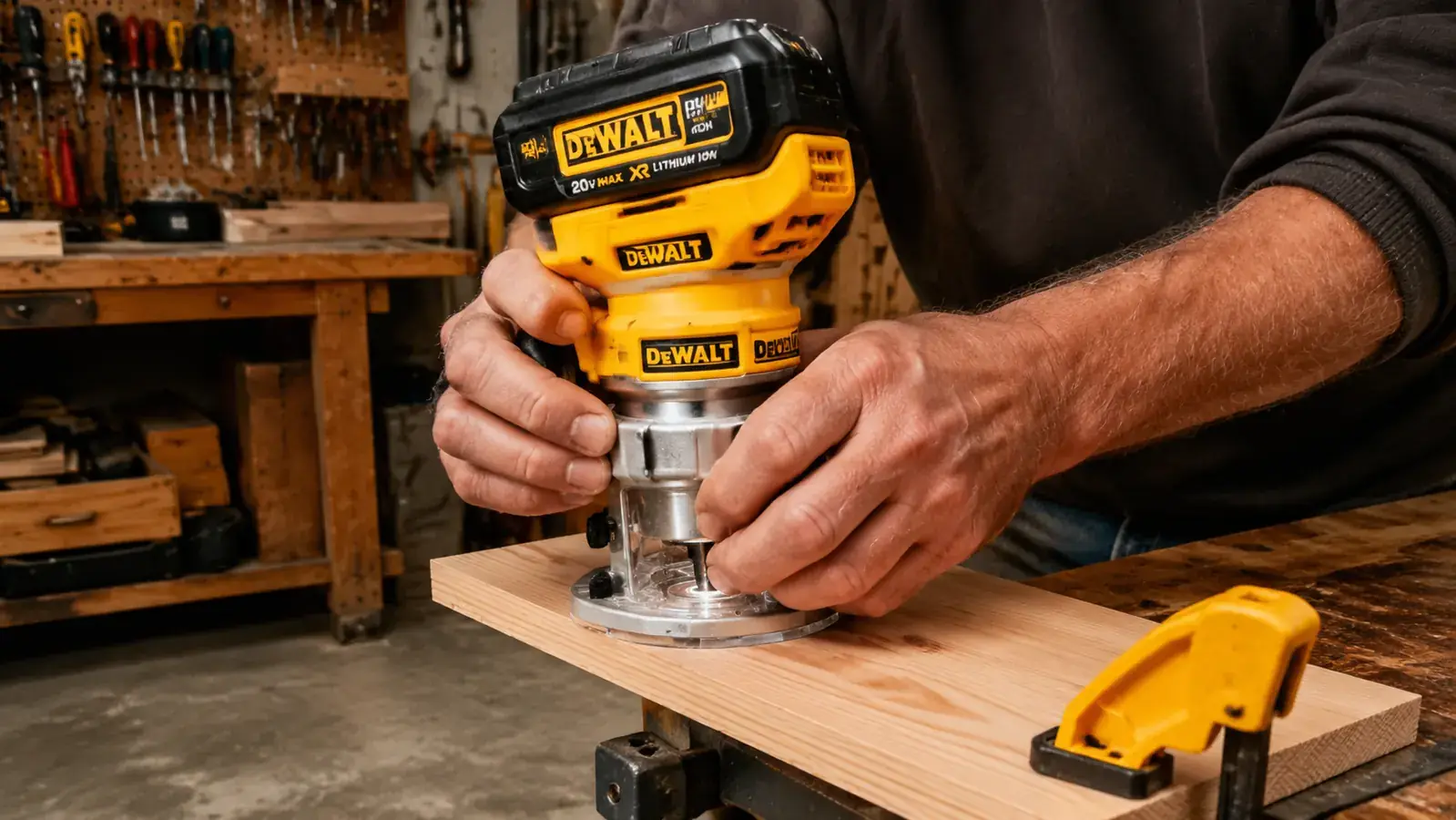
This is the obvious one and it matters more than you'd think. The moment you start routing a curved template or working around the inside of a frame, a cord becomes an active problem. It catches corners, pulls against your grip, drags across freshly routed edges. With a cordless router, you move freely in any direction without a cord changing the pressure on your cut. On long edge profiles especially, the consistency of your feed rate improves when nothing is pulling back against you.
Work Outside the Shop Without Running an Extension Cord
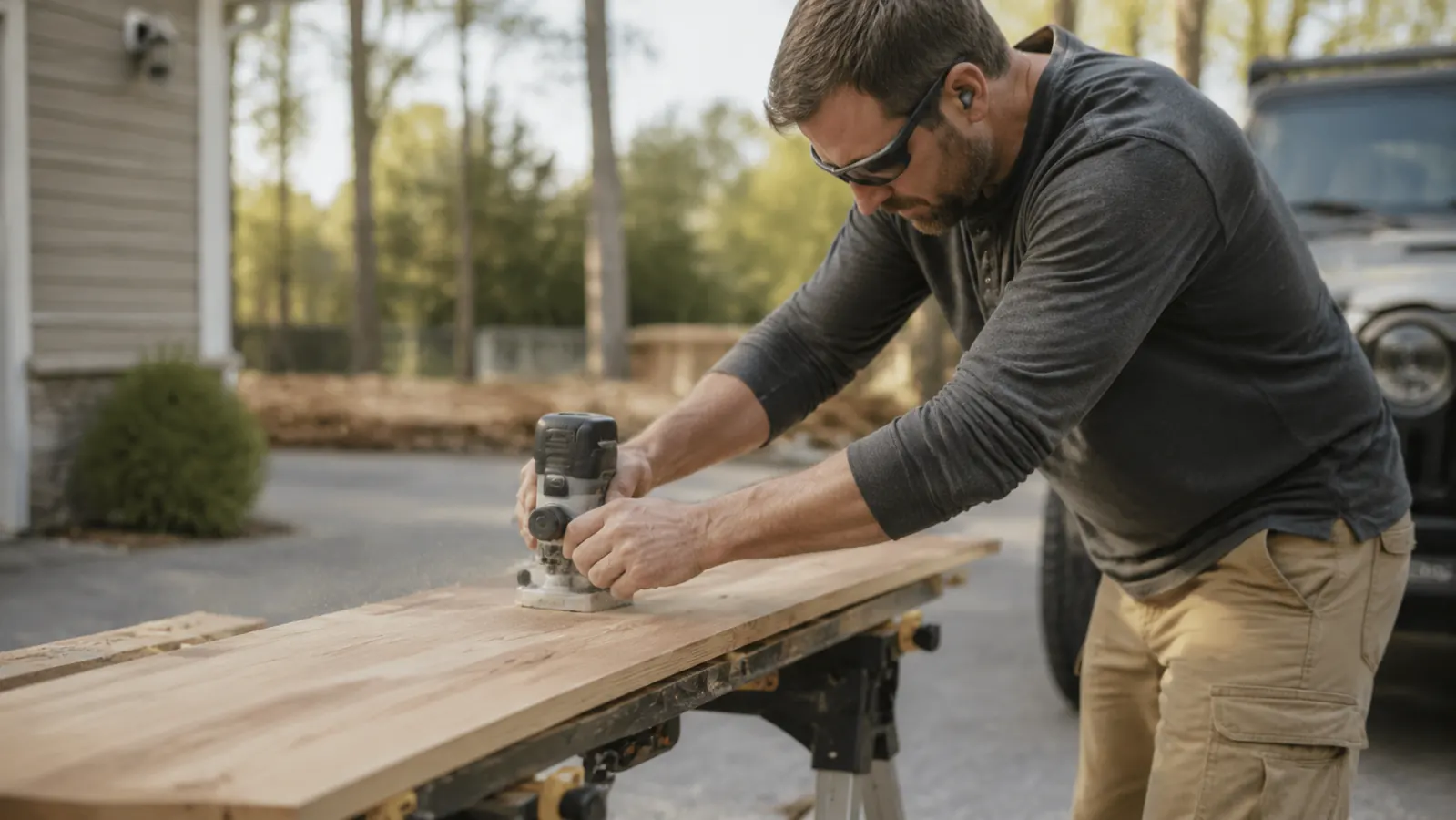
Sometimes the project is the deck. Or the front porch. Or the piece your wife wants trimmed on the back patio where the finish lighting is better. With a corded router, any of those jobs means wrestling a 100-foot extension cord across the yard and hoping it doesn't kink. With the DCW600B, you grab the router and a spare battery and go. I've routed fence boards, outdoor furniture parts, and porch trim out in the driveway without a single extension cord in sight.
Brushless Motor Means Real Runtime, Not Toy-Tool Runtime
My original skepticism about cordless routing was battery life. Router motors work hard. But brushless motors are fundamentally more efficient than brushed ones because they don't bleed energy as heat through carbon brushes. The DCW600B's brushless motor on a 5Ah battery handles a full morning of edge profiling, dado work, or template routing without needing a swap. I ran it through about forty linear feet of roundover on a maple dining table top before the battery indicator even dropped a bar. For a home shop where you're running the router in bursts, not continuously, a brushless motor is genuinely enough.
Tool-Only Pricing If You're Already in the DeWalt 20V Family
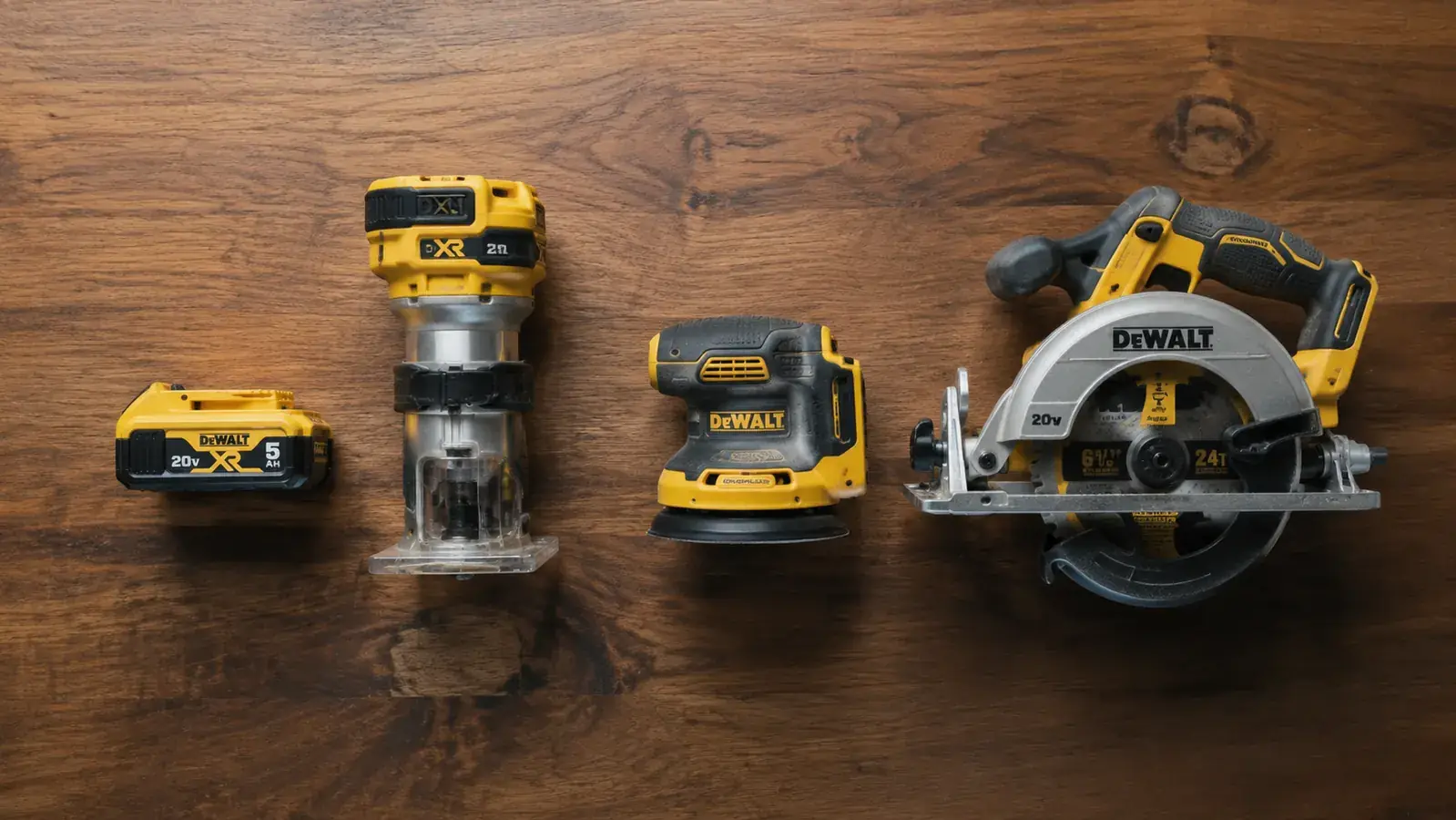
The DCW600B is sold tool-only, which is either a frustration or a genuine discount depending on your situation. If you already own DeWalt 20V batteries from a drill, impact driver, or sander, you don't pay the battery-and-charger tax. You just buy the bare tool at a lower price point and drop in a battery you already own. This is exactly the flexibility the 20V Max platform was designed for, and it's one of the better arguments for committing to a single battery ecosystem rather than mixing brands across your shop.
Easier Bit Changes With Variable Speed at Your Fingertips
The DCW600B has a dial on the body for speed control, which you can actually reach and adjust while the router is sitting in your hand above the workpiece. On most corded routers, speed adjustment means stopping, finding the dial on the motor housing, and hoping you can see the number markings in your shop lighting. Being able to quickly drop speed before a bit change, or bump it up when moving to a harder species, is a small quality-of-life thing that adds up over a whole session.
Compact Enough to Actually See What You're Doing
Full-size corded routers are heavy and tall. When you're routing a detail on a small part, the motor housing can block your sightline entirely. The DCW600B is physically smaller. The motor sits lower, the body is narrower, and you can see the bit and your layout line at the same time. This matters a lot for things like stopped dadoes, hinge mortises, and any detail cut where your starting and stopping points are marked on the wood.
Compatible With Aftermarket Plunge and D-Handle Bases
One thing I did not expect when I bought this router is how many third-party base options exist for it. The DCW600B's motor unit fits aftermarket plunge bases from companies like Hartville Tool and a handful of smaller makers. That means you can use the same motor for fixed-base profiling work and plunge work for dadoes, mortises, and template cuts, just by swapping the base. A full-size corded router with interchangeable bases costs significantly more. Getting that same flexibility from a cordless motor that fits in your hand is a real advantage.
No Outlet Hunting in a Home Shop With Limited Circuits
Most garage shops run on one or two 20-amp circuits, and if your table saw, dust collector, and shop lights are already on them, adding a router starts to feel like a game of musical outlets. With a cordless router, that circuit load goes away entirely. I've run my table saw and the DCW600B at the same time without a second thought, because the router isn't pulling from the wall at all. For a home shop where the electrical panel is already stretched, that matters.
Better for Template Routing Where You Need Both Hands on the Tool
Template routing is where I noticed the biggest practical difference. When you're following a curved template with a flush-trim bit, you need both hands on the router body to maintain consistent pressure against the template. With a cord, your right hand is unconsciously compensating for cord weight and direction. Without one, both hands are just on the tool. My curved cuts got cleaner once I stopped routing with a leash attached. It took a few sessions to realize why, but the cordless router deserves the credit.
4.8 Stars Across More Than 10,000 Reviews Means It's Not a Fluke
I try not to put much weight on star ratings, because most reviews come from people who just unboxed the tool. But 10,000-plus reviews on a router is a different situation. That's years of real-world use across a lot of different shops and skill levels, and a 4.8 average at that volume is hard to fake. The common praise in the reviews echoes what I've experienced: smooth depth adjustment, bit grip that doesn't slip, and a motor that doesn't bog on hardwood. The common complaints, when they exist, point to wanting a larger collet option for bigger bits. That's a fair limitation to know going in.
What I'd Skip
If you need a router primarily for table mounting, get a full-size corded router. The DCW600B works in a router table but the motor is smaller than what most router table lift systems are designed around, and you lose the battery convenience the moment the tool is fixed in place. For table use only, a Bosch 1617EVS or a Porter-Cable 890 series is still the better call. This router earns its keep as a handheld tool. That's where cordless makes sense and where the two-year review I did on it goes into much more detail.
My curved cuts got cleaner once I stopped routing with a leash attached. It took a few sessions to realize why, but the cordless router deserves the credit.
If handheld routing is your primary use case, the DCW600B is worth every dollar.
More than 10,000 woodworkers have reviewed it, and the ones who've owned it long enough to actually wear it in agree: the brushless motor holds up, the depth ring is precise, and not having a cord changes how you work. If you're already on DeWalt 20V batteries, this is a no-brainer add to the shop. If you're not, factor in the cost of a starter battery kit when you compare prices.
Amazon Check Today's Price on Amazon →