
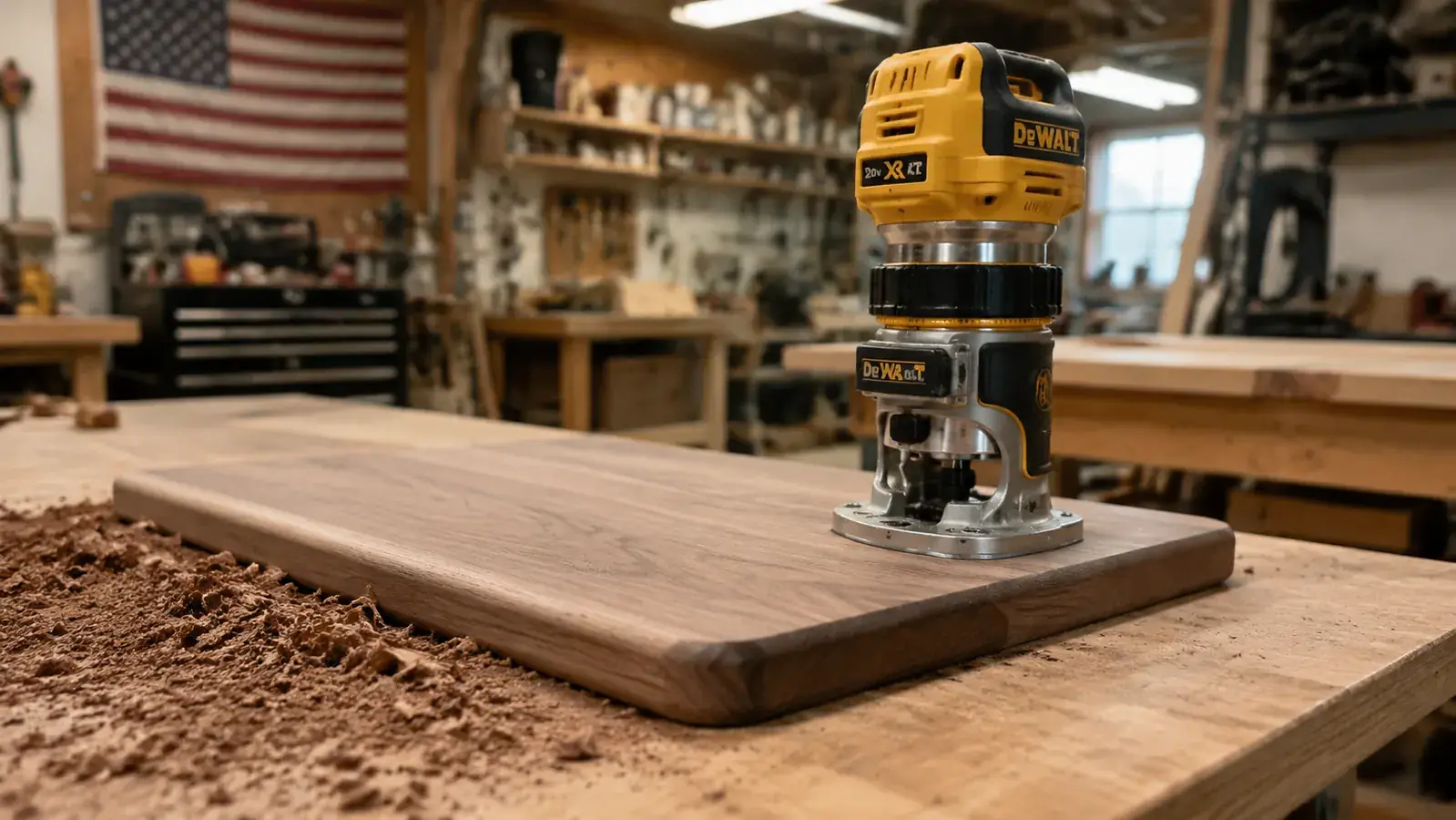
Let me save you fifteen minutes of forum-reading right now. The DeWalt DCW600B and the Bosch 1617EVS are not the same kind of router. One is a 20V cordless trim router that weighs 3.4 pounds and runs on the same battery as your drill. The other is a 12-amp corded full-size router that accepts both plunge and fixed bases, can spin a 2.5-inch raised-panel bit at full speed, and belongs in a router table or a mortising sled. If someone online told you they are direct competitors, they were comparing the wrong things.
That said, if you are a weekend woodworker setting up a home garage shop, this comparison is genuinely worth making because the DCW600B costs roughly the same as the 1617EVS and it covers a huge chunk of what most hobbyists actually do with a router. Edge profiles, small dadoes, rabbets, hinge mortises, flush-trimming with a template. The Bosch earns its place when you move into raised panels, deep mortises, or a full-time router table. The question is: where are you right now?
| feature | left | right | winner |
| feature | left | right | winner |
| feature | left | right | winner |
| feature | left | right | winner |
| feature | left | right | winner |
| feature | left | right | winner |
| feature | left | right | winner |
| feature | left | right | winner |
Already running DeWalt 20V tools? The DCW600B drops straight in at current price.
The DCW600B runs on any DeWalt 20V MAX battery. No cord, no adapters, no cord management in a tight shop. It has 4.8 stars across more than 10,000 reviews. See current pricing on Amazon.
Amazon Check Today's Price on Amazon →Where the DCW600B Wins
The DCW600B wins in almost every situation that involves moving the router through the shop or taking it to the work. Routing a roundover along the edge of a shelf you just clamped to sawhorses in the middle of the garage, you reach for a router without thinking about where you will plug it in. That small mental shift adds up over hundreds of sessions. No cord to step over, no cord to knock a workpiece loose when it catches on a corner, no extension cord debate when your closest outlet is on the other side of the shop.
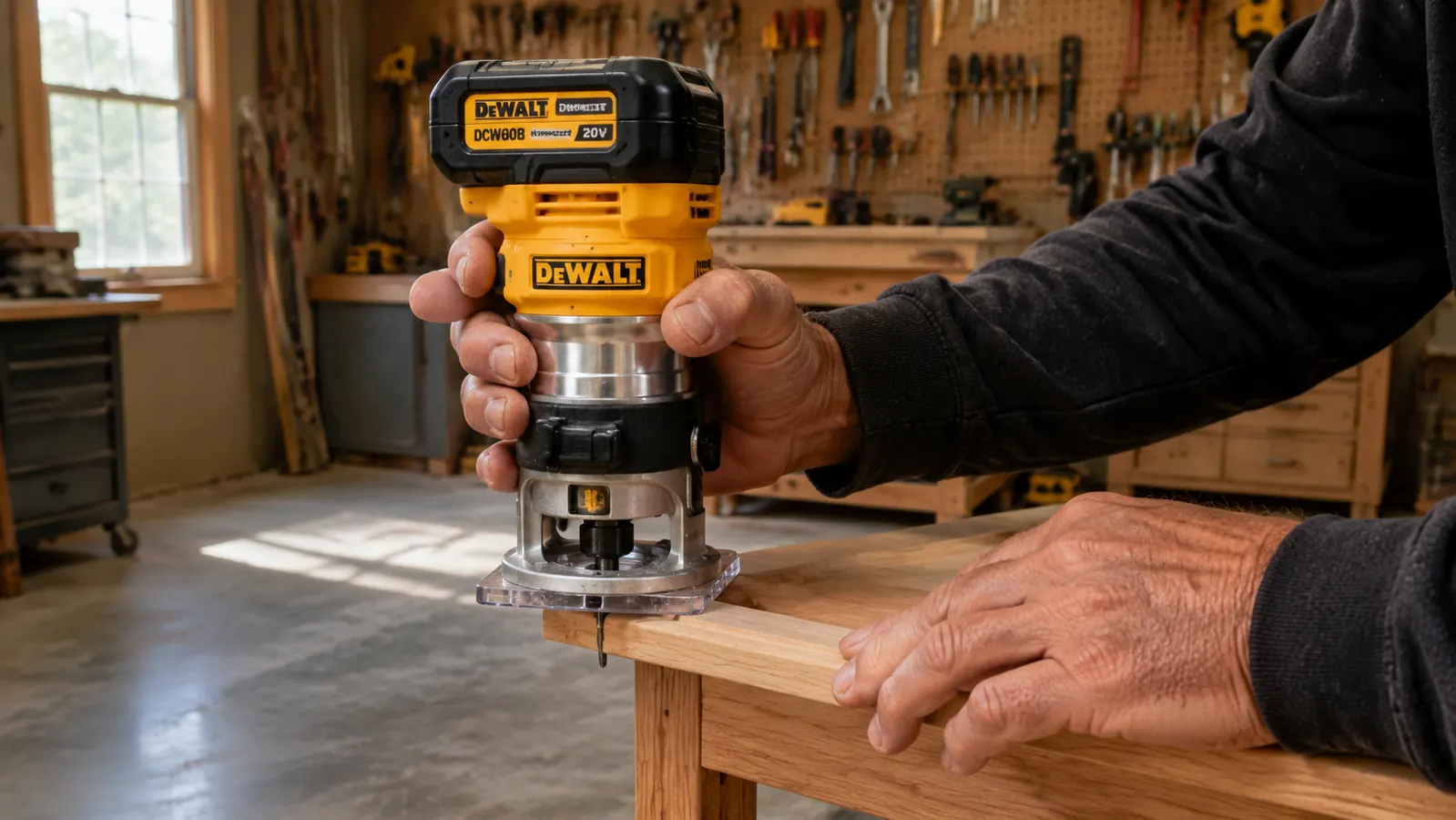
The brushless motor in the DCW600B punches well above what you would expect from a trim router. I have run 1/2-inch roundovers, 3/8-inch cove bits, and 1/4-inch straight bits through red oak at full pass depth without the motor hunting. DeWalt's variable speed dial lets you dial back to around 16,000 RPM for larger bits or brittle veneers, which is something cheaper trim routers do not offer. The fixed base depth adjustment is precise and locks firmly without any base wobble under normal routing passes.
The DCW600B also wins on weight and fatigue. At 3.4 pounds, you can run it for an hour of edge profiling without the forearm soreness that a 7-pound full-size router builds up. If you are doing detail work, routing signs, or working on pieces that sit in your lap at the bench, a lighter tool is a real quality-of-life improvement, not a compromise.
Where the Bosch 1617EVS Wins
The Bosch 1617EVS wins on raw capacity and versatility. The 2.25 HP motor has more sustained torque than anything a battery-powered trim router can match, and that matters when you are spinning a 2-inch raised panel bit, routing deep dadoes in 3/4-inch plywood in a single pass, or setting it up in a router table for repeat production cuts. The 1617EVS accepts both 1/4-inch and 1/2-inch collets, which opens the door to every bit in the catalog. A large portion of the best router bits, the ones from CMT, Whiteside, and Freud, ship with 1/2-inch shanks. The DCW600B cannot run them.
The combo kit that the 1617EVS usually ships in also gives you a full plunge base. Plunge routing is the only clean way to start a mortise in the middle of a panel, route a stopped dado, or cut a clean hinge pocket from center. If your projects are trending toward furniture-grade joinery rather than edge finishing, that plunge base is not optional. The DCW600B has a plunge base sold separately, but it is a smaller-diameter platform and still limited to 1/4-inch bits.
The DCW600B handles 80 percent of what a home shop router gets asked to do. The Bosch 1617EVS handles the other 20 percent, and that 20 percent is the stuff you buy a serious router for.
Running DeWalt 20V tools already? The DCW600B is the router your shop has been waiting for.
4.8 stars. Over 10,000 real reviews. Brushless motor, 25,000 RPM max speed, variable speed dial, no cord to manage. The most practical router upgrade most home shops will ever make.
Amazon Check Today's Price on Amazon →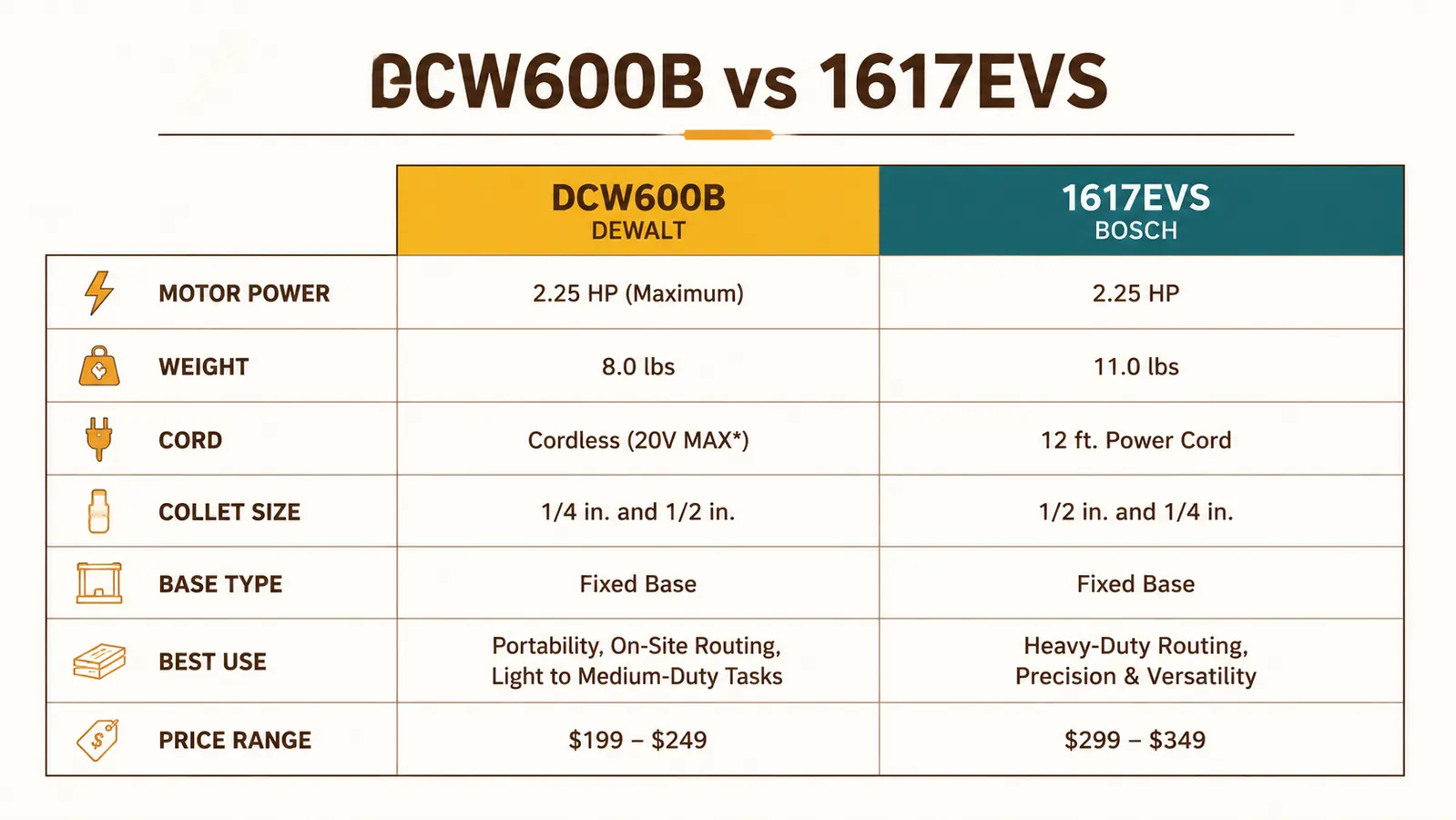
The Real Question: What Does Your Shop Actually Need Right Now?
Most hobbyist woodworkers in their first five to ten years of serious shop time are doing edge profiles, rabbets, dadoes for shelves and cabinets, and the occasional flush-trim job with a pattern bit. Those tasks are all 1/4-inch collet territory. They all benefit from a router you can grab and go without managing a cord. They do not require 2.25 HP. For that shop, and I would estimate that describes 70 percent of the people reading this, the DCW600B is the more practical and satisfying tool to own.
The shop that needs the Bosch 1617EVS looks different. It has a router table with a lift. It has a lift-compatible base. It is building raised-panel cabinet doors, making mortise-and-tenon joints with a router jig, or running production cuts where a corded motor simply will not heat up the way a battery-powered unit can. If that is your shop today, or you know that is where you are headed in the next year, the Bosch is the right call. But it does not replace the DCW600B for the freehand edge work. Most shops with a full-size router end up owning a trim router too.
Battery Life and Real-World Runtime
I run the DCW600B on a DeWalt 5.0 Ah battery. On a session of edge profiling, I have never burned through a full charge on a single workday in the shop. Routing a 60-inch roundover along both faces of a shelf panel, then switching to a 3/8-inch cove bit to profile four table aprons, uses maybe 30 to 40 percent of a 5.0 Ah charge. If you are making continuous cuts for multiple hours, like running repeated profiles on a batch of 50 picture frame pieces, you will want a second battery charged and ready. For anything else, one battery handles a full shop session without interruption.
The DCW600B also has electronic motor protection that pulls back power if the motor gets close to overheating under sustained heavy load. I have triggered this once, on a long session of plunge-cutting shelf pin holes with a 1/4-inch spiral upcut bit. The motor slowed briefly, I set it down for two minutes, and it was fine. It is a real-world limitation worth knowing about, but in two years of regular use it has happened exactly once.
Bit Compatibility: The One Area Where the Bosch Has a Clear Edge
The DCW600B collet accepts 1/4-inch shank bits only. That covers the majority of trim bits, pattern bits, roundovers, coves, straight bits, flush-trim bits, and rabbeting sets. It does not cover 1/2-inch shank bits. If you are shopping for a router bit set and you want access to the premium 1/2-inch shank options from Whiteside or Freud, the DCW600B will not run them. The Bosch 1617EVS ships with both 1/4-inch and 1/2-inch collets, so it opens the entire bit catalog.
In practice, a well-curated set of 1/4-inch shank bits from a quality manufacturer like Whiteside or CMT covers everything a trim router should be doing. Where the 1/2-inch shank limitation actually hurts is with very large profile bits, like a classical or ogee casing bit with a large cutter head. Those bits are designed to be run on full-size motors with 1/2-inch collets for a reason. If that work is in your future, plan accordingly.
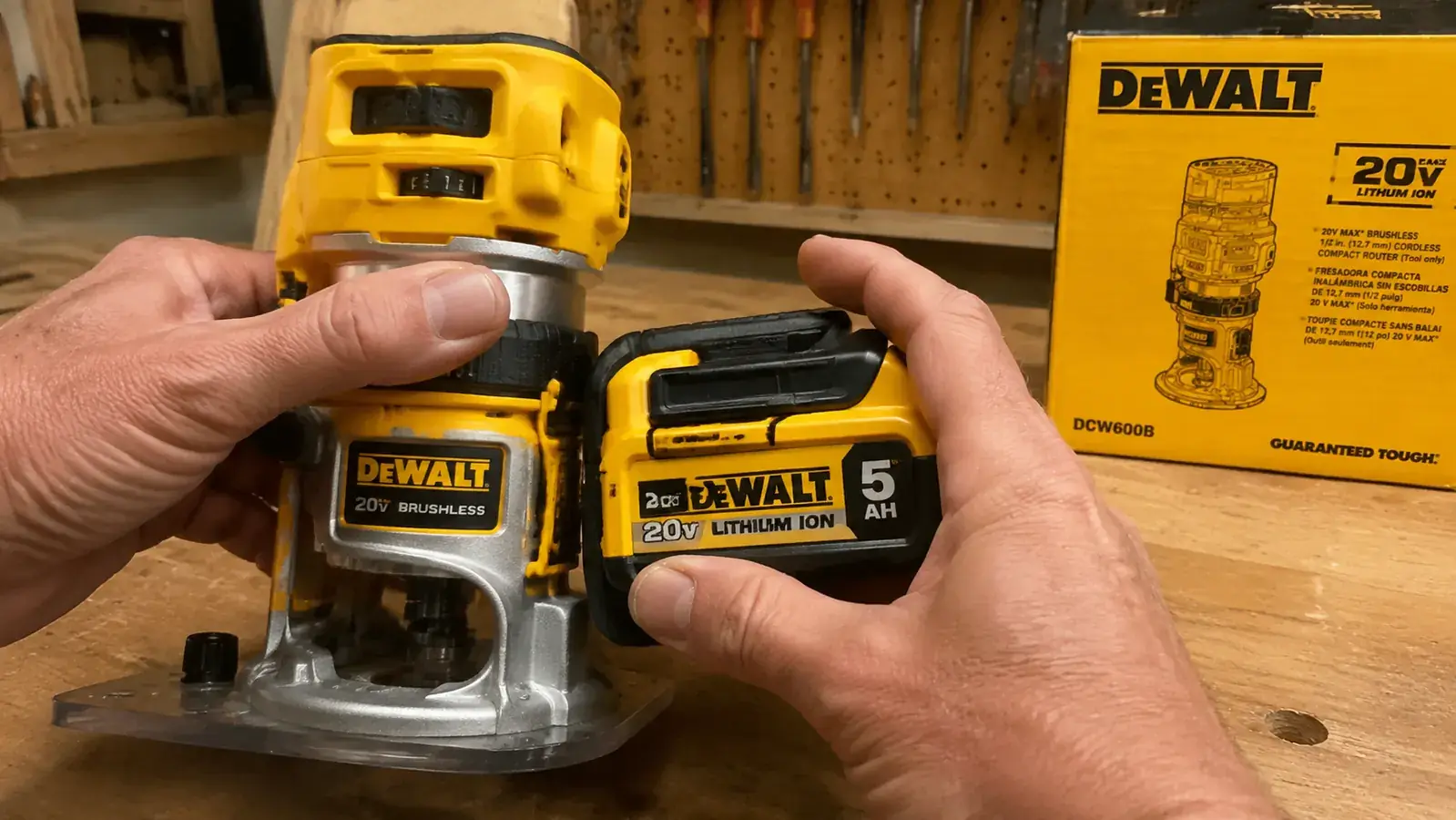
Who Should Buy the DeWalt DCW600B
Buy the DCW600B if you are already invested in the DeWalt 20V MAX battery platform. It drops in with no new chargers, no new batteries, no additional adapters. It handles every trim routing task a home shop woodworker runs into, it is light enough to use for an hour without fatigue, and it is precise enough that you will not be chasing tearout or base wobble on your finished pieces. For hobbyist edge work, template routing, dadoes, and rabbets, this is the practical, satisfying choice. The 4.8-star rating across more than 10,000 reviews is earned.
Who Should Skip the DCW600B and Buy Something Else
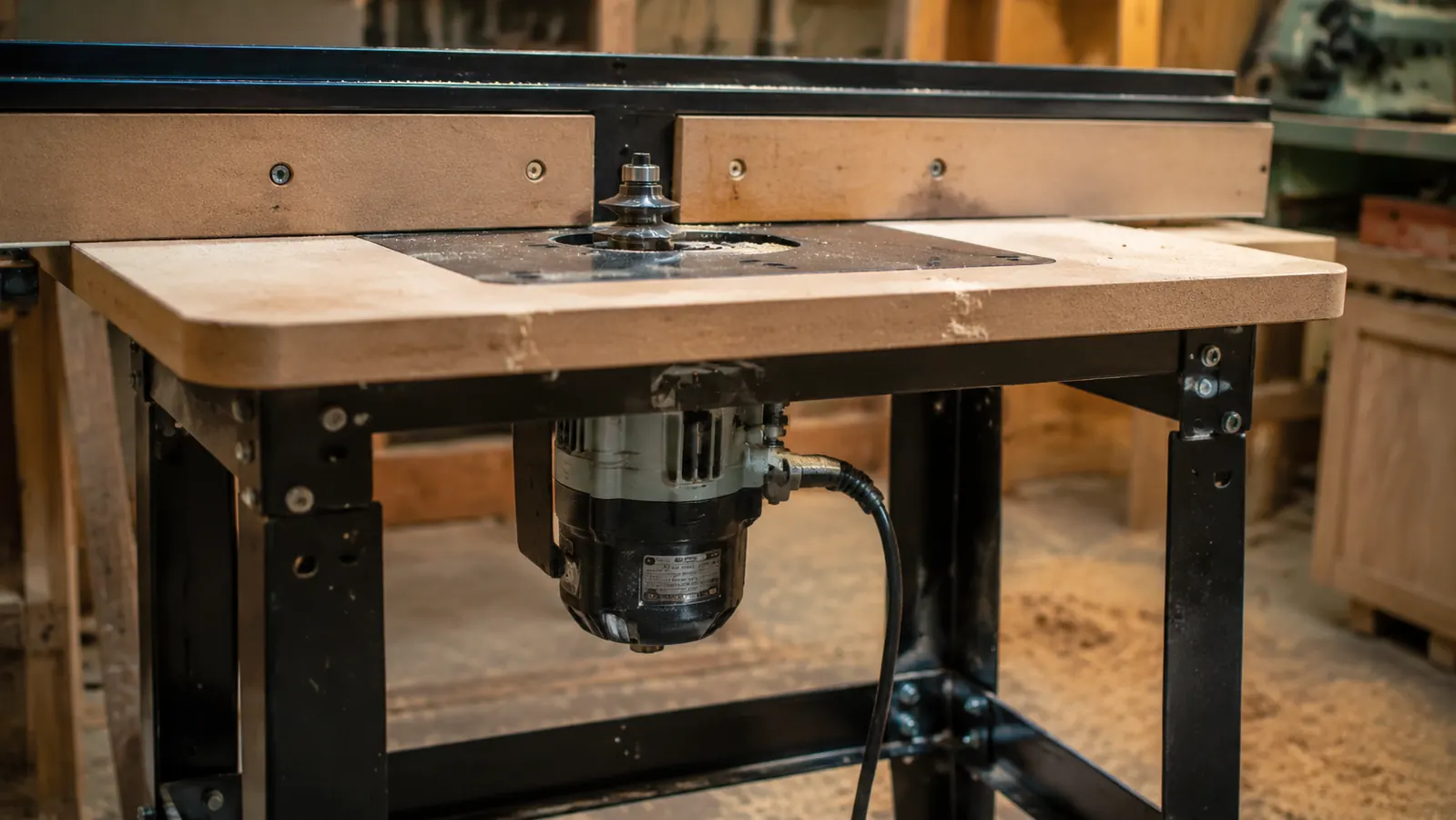
Skip the DCW600B if you need a router table workhorse. The DCW600B can technically be used in a router table, but it is not designed for sustained horizontal use at high load, and it only accepts 1/4-inch shank bits. If you are building a router table, you need a full-size router with a 1/2-inch collet, a plunge base, and compatibility with a router lift. The Bosch 1617EVS was purpose-built for that setup. Skip the DCW600B also if your primary work involves large raised-panel profiles, deep mortising, or any sustained production routing that would push a trim motor hard over multiple hours.
The most-reviewed cordless router on Amazon, and the right fit for most home shops.
If edge work, template routing, dadoes, and rabbets describe what you actually do in your shop, the DCW600B is the router that will get picked up every single session. See current pricing and availability on Amazon.
Amazon Check Today's Price on Amazon →