
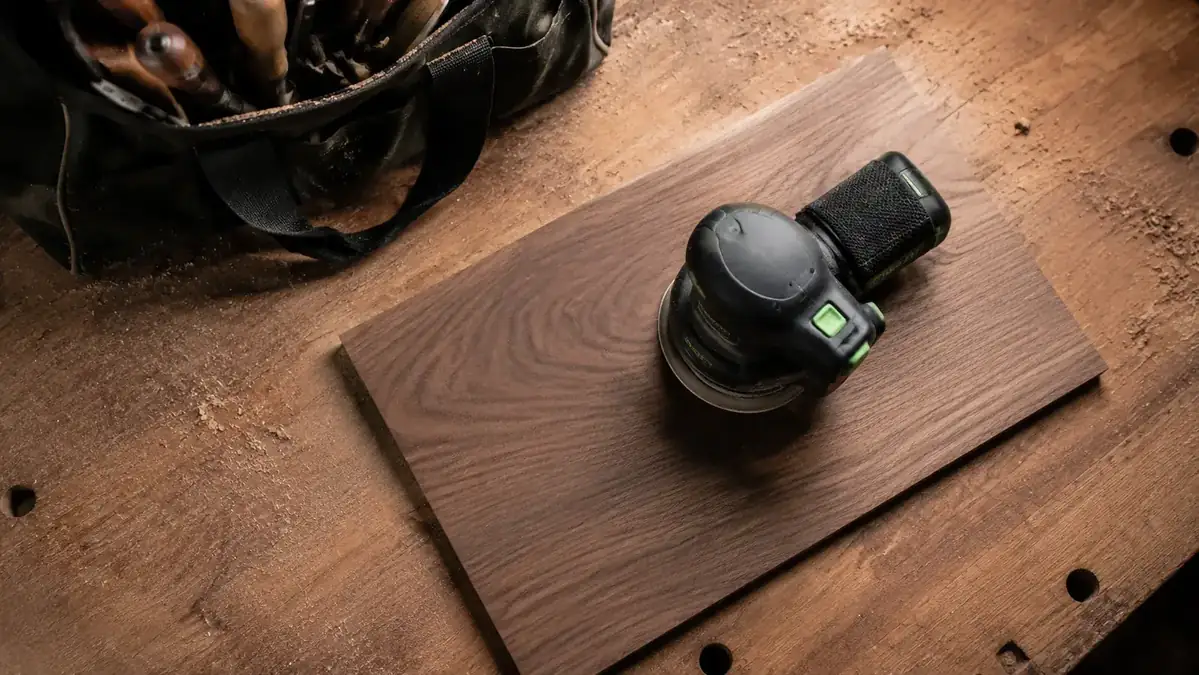
If there is one tool I would hand every beginning woodworker before anything else, it is a random orbit sander. Not because sanding is glamorous, but because it is what separates a project that looks finished from one that looks like you built it in a hurry. I have been woodworking in my garage for 25 years and I reach for my sander more than almost anything else in the shop. The one I run now is the DeWalt DCW210B, a 20V cordless that rides on the same battery as my router and circular saw. It is not perfect, but it is the right tool for the job every single time.
Here are the 10 reasons I consider a random orbit sander non-negotiable for a home woodshop, no matter what you build or what stage you are at.
Tired of sanding marks that show through your finish? The DCW210B fixes that.
The DeWalt DCW210B runs a 5-inch hook-and-loop pad at variable speed, collects dust into a bag or shop vac, and shares its 20V battery with your other DeWalt tools. No cord, no tangles, no excuse not to sand properly.
Amazon Check Today's Price on Amazon →Swirl-Free Finish Prep on Flat Panels
This is the big one. A belt sander leaves directional scratches that telegraph right through oil, poly, or stain. A random orbit sander combines a spinning disc with a random orbital pattern so no two scratches ever run parallel. The result is a surface that takes finish evenly and does not show tool marks under raking light. I sand every flat panel to 180-grit before any coat goes on, and I have never once wished I had skipped it.
Between-Coat Scuffing Without Burning Through
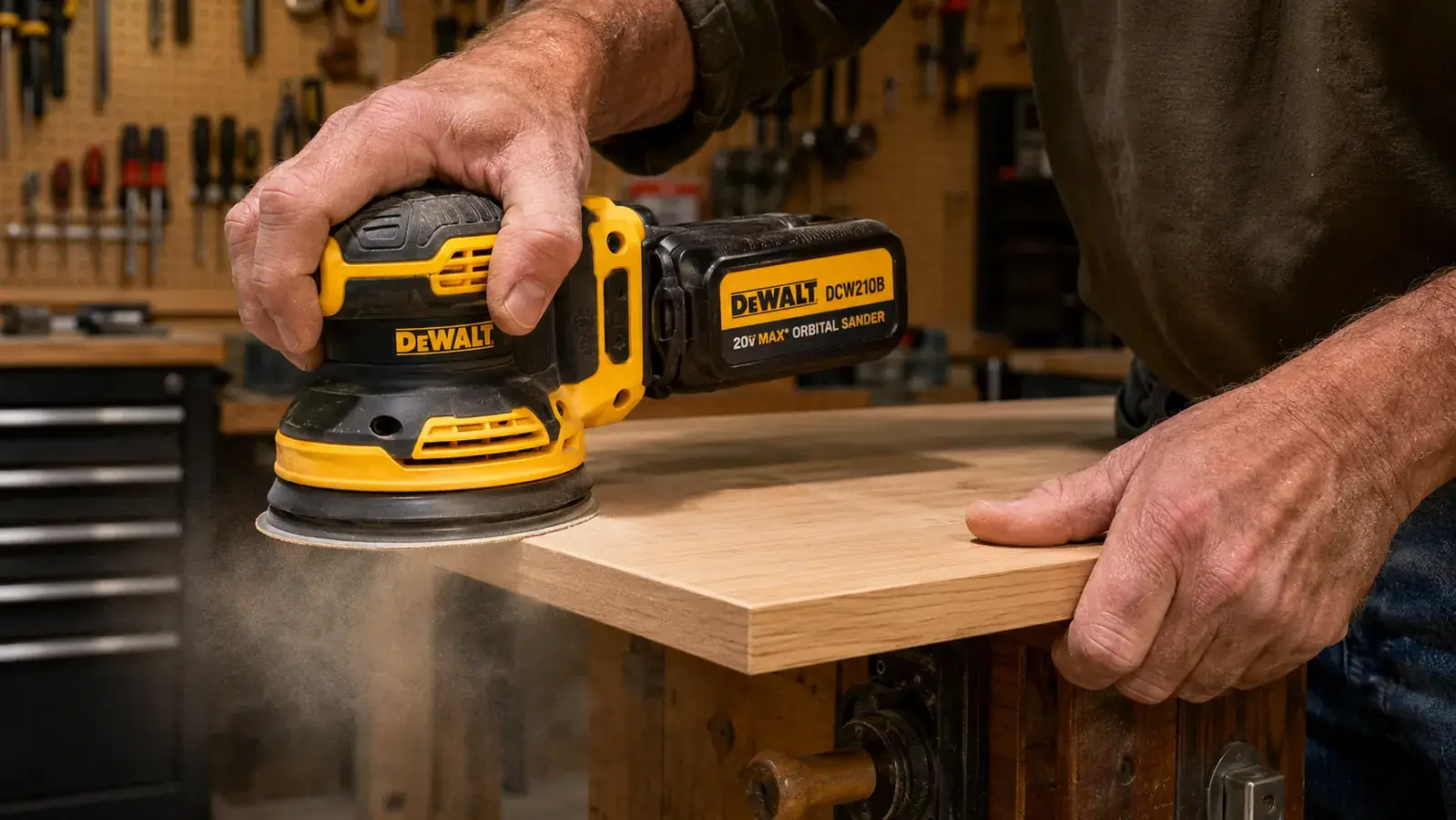
After the first coat of poly or lacquer dries, you need to scuff it before the next coat goes on. The goal is adhesion, not removal. A sheet of sandpaper by hand is slow and uneven. The random orbit sander with a 320-grit disc lets you scuff the whole surface in 90 seconds with consistent pressure. The variable speed on the DCW210B means you can drop it down to a crawl so you are not blowing through corners. This one application alone justifies the tool.
Paint Removal Without Gouging the Wood
Stripping old paint from a piece you are refinishing is tedious with a hand scraper and dangerous with a heat gun near veneer or glued joints. Start with 80-grit on a random orbit sander and you can peel through latex paint on solid wood without the risk of an orbital gouging a divot the way an angle grinder would. The random pattern keeps cuts shallow. Step up through the grits when the paint is gone and you are already prepped for finish.
Surface Flattening After Glue-Up
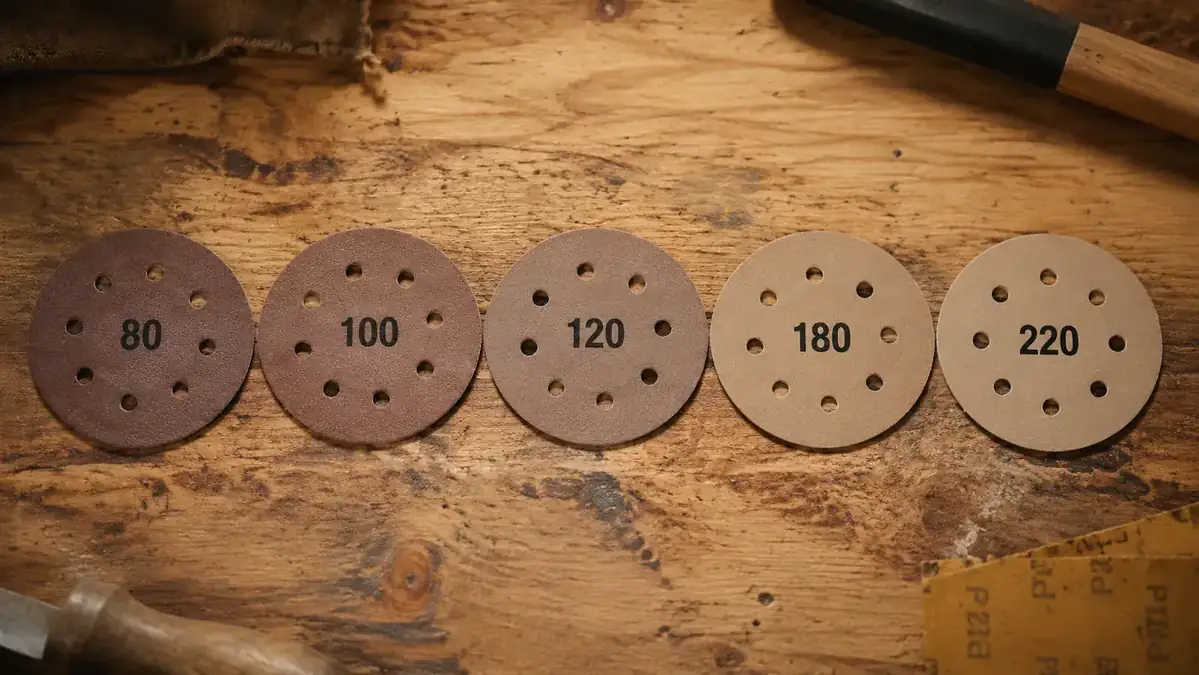
When you glue up a panel from multiple boards, the joints are never perfectly flush right off the clamps. A hand plane is the traditional answer, and I own one, but for a 20-inch walnut panel with a little cup in it, I reach for 80-grit on the random orbit first. It levels the high spots without the setup time of a planer sled and without the tearout risk of a hand plane on reversing grain. Follow it up through 120, 150, and 180 and the glue line disappears.
Cleaning Up Saw Marks on Crosscuts and Rips
Even a good table saw blade leaves machine marks, especially on crosscuts through figured wood. A quick pass with 120-grit on the face nearest the cut erases those marks in under a minute. I do this on every panel before layout, not because the marks will always show, but because they affect how pencil lines read and how well a shooting board registers. It is a 60-second step that costs nothing and improves everything downstream.
Easing Sharp Edges Before Finish
Sharp 90-degree edges look crisp in the shop and feel like paper cuts on a finished piece. Running a round-over bit in the router is the formal answer, but for a workbench top or a shop cabinet door, a quick pass on the edge with 150-grit and the sander tilted 45 degrees knocks the arris off in seconds. The finish catches the edge better, the piece feels built rather than machined, and your hands do not bleed when you move it. This is one of those habits that takes no extra time once it is in your routine.
Prepping Hardwood for Stain or Dye Absorption
Stain does not lie. It finds every scratch, every mill mark, every swipe from a damp rag. If the surface is not prepared consistently, the color will be blotchy no matter how good the stain is. Sanding to 150-grit with a random orbit sander opens the grain uniformly across the whole panel so the stain or dye goes in evenly. I do not go past 180 on any piece I plan to stain, because finer grits close the grain and make absorption uneven in the opposite direction. Knowing where to stop is part of the skill.
Fitted Parts That Need Just a Little Off
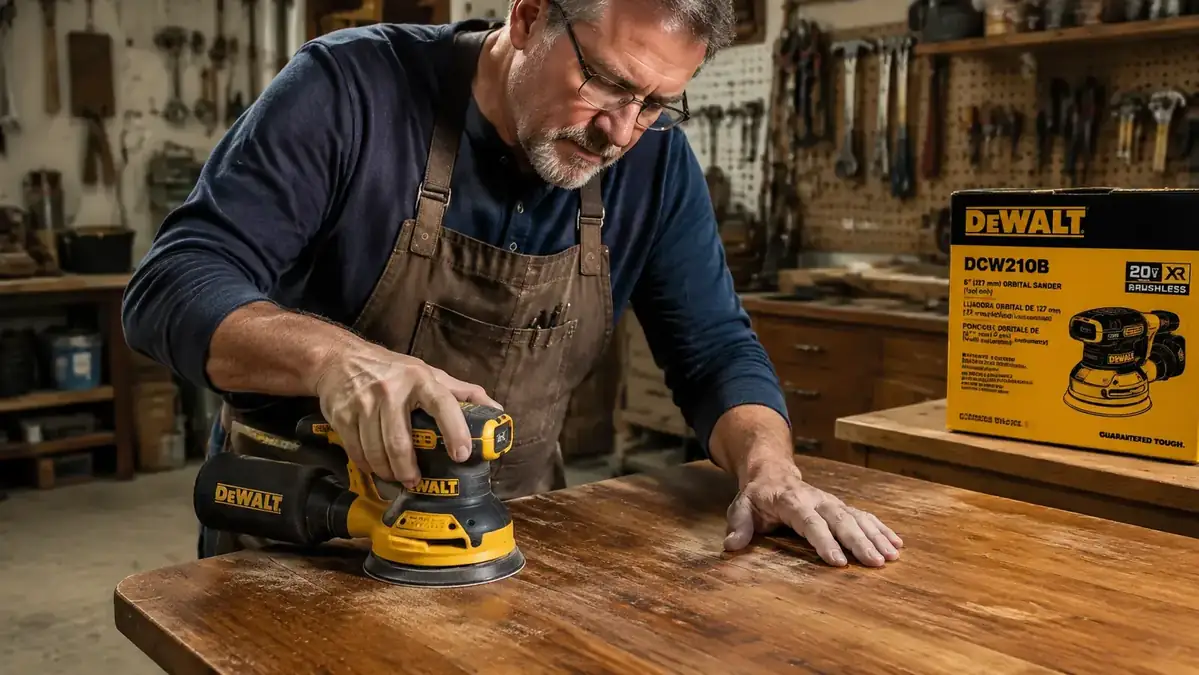
Every woodworker has had a drawer front that binds, a cabinet door that rubs at the top corner, or a shelf that is half a millimeter too wide to drop in without forcing. The random orbit sander is the right tool for the micro-removal jobs where a hand plane would take too much and a scraper would take too long. Scribble a pencil line on the high spot, sand until the line disappears, test the fit. Repeat once or twice and the piece drops in clean. It is slower than a jointer but forgiving of mistakes, which matters more in a home shop.
Cordless Means It Goes Where the Work Is
The thing about a corded sander is the cord always ends up dragging across the piece or pulling toward the edge you are trying to reach. When I switched to the DCW210B, the cord problem disappeared. I can sand a cabinet in place, flip a panel without unplugging, and walk it over to a window for inspection without resetting anything. The DCW210B shares its 20V battery with my router and circular saw, so if one battery is charging, there are two more in rotation. Runtime on a 5Ah pack is well over an hour of actual sanding, which covers most of a project session.
Dust Collection That Actually Works
The DCW210B has a sealed dust bag and a port for a shop vac hose. I run it to my shop vac about 90 percent of the time, and the amount of fine sanding dust that makes it into the shop air is minimal compared to any sander I ran before. If you care about your lungs, this matters. Fine sanding dust from hardwoods is a real respiratory hazard over years in a closed garage. A sander that captures it at the source is not a luxury feature. It is the difference between a hobby you can keep for decades and one that catches up with you.
What I Would Skip
A detail sander, sometimes called a mouse sander, is the one type I see home woodworkers buy alongside their random orbit and then barely use. The small triangular pad is supposed to reach corners, but in practice it just scratches in one direction and leaves marks you have to clean up anyway. For inside corners, fold a piece of 150-grit sandpaper by hand, back it with a finger, and run it through. Two passes is all it takes. You do not need a separate tool for that job. Save the money for better discs or a second battery pack.
The random orbit sander is not a shortcut. It is the step between rough wood and a finish worth putting on. Skip it and your topcoat will tell on you every time.
If you want to go deeper on technique, including how to run the grit progression for a glass-smooth surface and where most woodworkers go wrong between 150 and 180, I wrote it all up in the how to get a glass-smooth finish with a random orbit sander guide. And if you want the full two-year breakdown on the DCW210B itself, the long-term review covers what held up, what did not, and what I would buy instead if I were starting over.
The DCW210B does all 10 of these jobs and it runs on the battery already in your drill.
It is a tool-only listing, which means if you are already in the DeWalt 20V ecosystem you are not paying for hardware you do not need. 13,599 reviews average 4.8 stars. That kind of consensus from woodworkers is not an accident.
Amazon Check Today's Price on Amazon →