
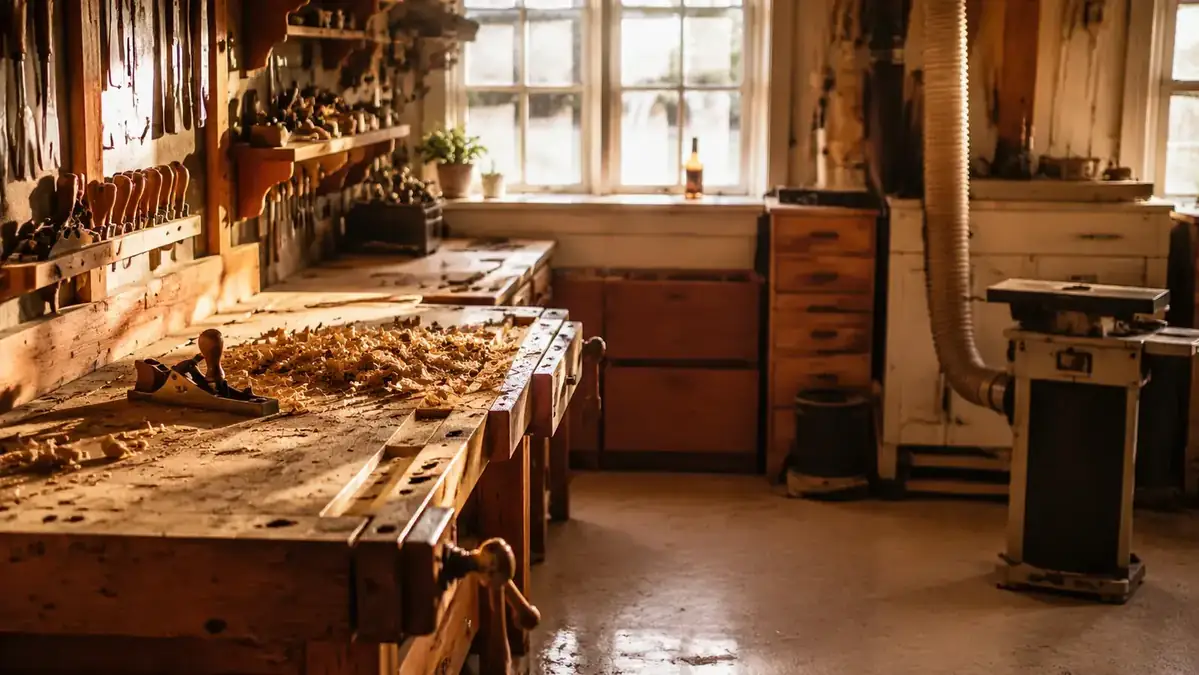
It was a Saturday afternoon in February 2023, and I was twelve inches into a rip cut on a walnut board when I sneezed so hard I nearly sent the piece sideways. I caught it, finished the cut, turned off the saw, and stood there for a second looking at the cloud of fine dust still hanging in the air around me. The shop was twenty-two degrees outside. I hadn't opened a window or a vent in three hours. The dust was just sitting there. And I was breathing it.
I've been woodworking in this garage for twenty-five years. I learned from my dad in his basement shop, and he swept at the end of every session the same way he swept the sidewalk in front of the house: with a push broom and a good attitude. That's how I did it too. Vacuum after, maybe. Dust bag on the saw, sure. But a real dust collector? That felt like something guys with bigger shops and bigger budgets needed. Not me.
What I didn't think about, for most of those twenty-five years, is that the dust you see is the least dangerous kind. It's the stuff you can't see, the particles under 10 microns, that stay suspended in your shop air for hours after the tool stops. The fine walnut, cherry, and maple dust I was running through my lungs every weekend is the kind of dust that causes cumulative damage. My dad didn't know that. I didn't let myself think about it.
But the sneeze that February afternoon was the third one in ten minutes, and my eyes were watering, and something about standing in that cloud made me finally do the math. I'd been putting this off for years because I told myself I couldn't justify the cost of a serious collector, or that my shop was too small, or that I didn't run tools long enough to really need one. All of that was rationalization. I just hadn't prioritized it.
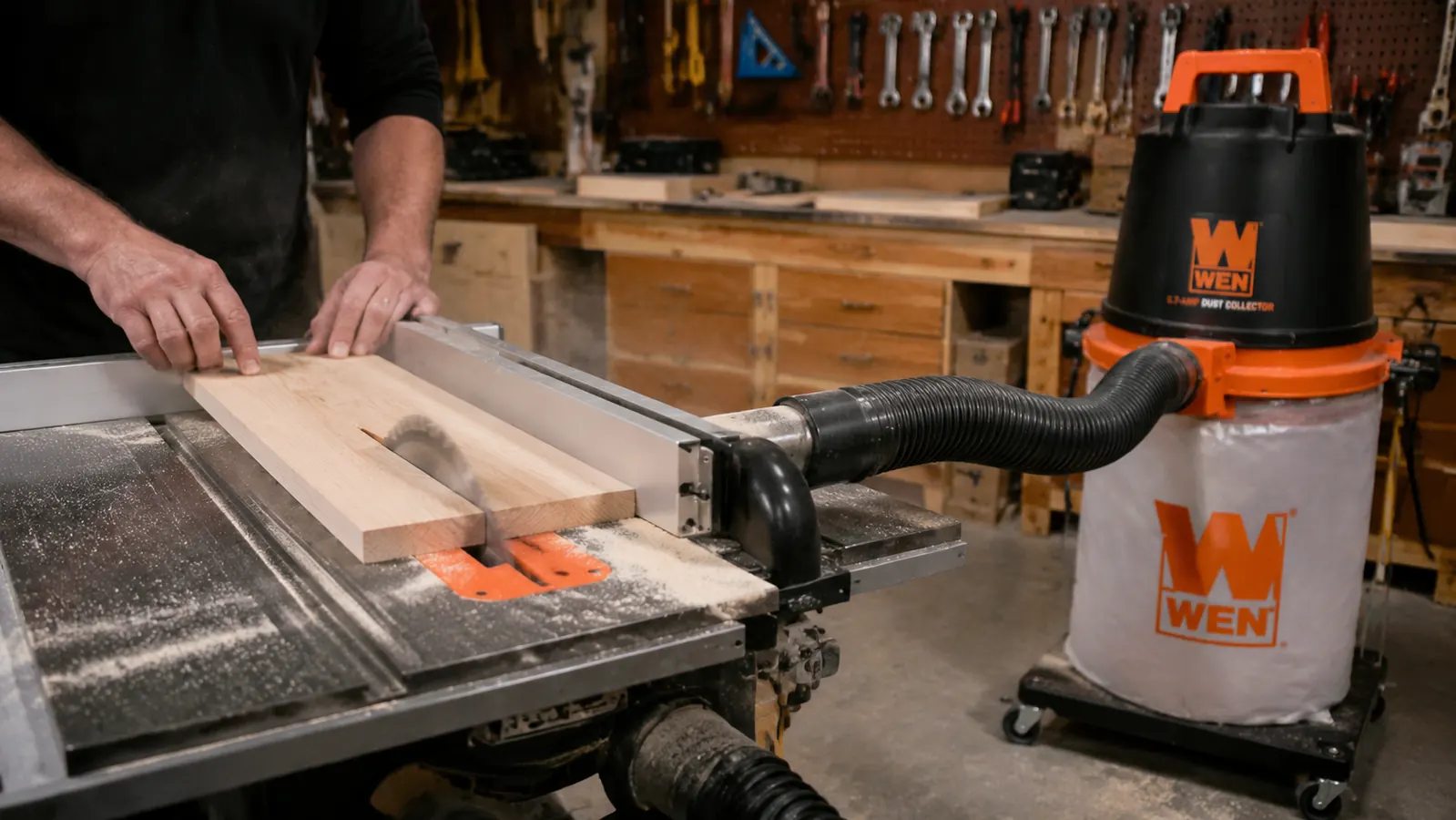
That night I ordered the WEN 5.7-Amp Dust Collector. Not because it's the most powerful unit on the market. Because it fit my single-car garage, came with a 12-gallon bag, had a mobile base so I could position it wherever the session needed it, and cost about the same as a decent dinner out for two people. It was at my door Tuesday morning.
The first thing I noticed wasn't the air quality. It was the surface. With the dust pulled away at the source, my reference faces stayed clean during the cut. The marking gauge lines I'd laid out didn't disappear under a film of fine powder between passes.
If you're still sweeping instead of collecting, the WEN is where most home shops should start.
The 5.7-amp motor, 12-gallon bag, and 4-inch hose connection fit naturally alongside a table saw, bandsaw, or router table. Mobile base means it goes wherever the session does. Under $130 at current Amazon pricing.
Amazon Check Today's Price on Amazon →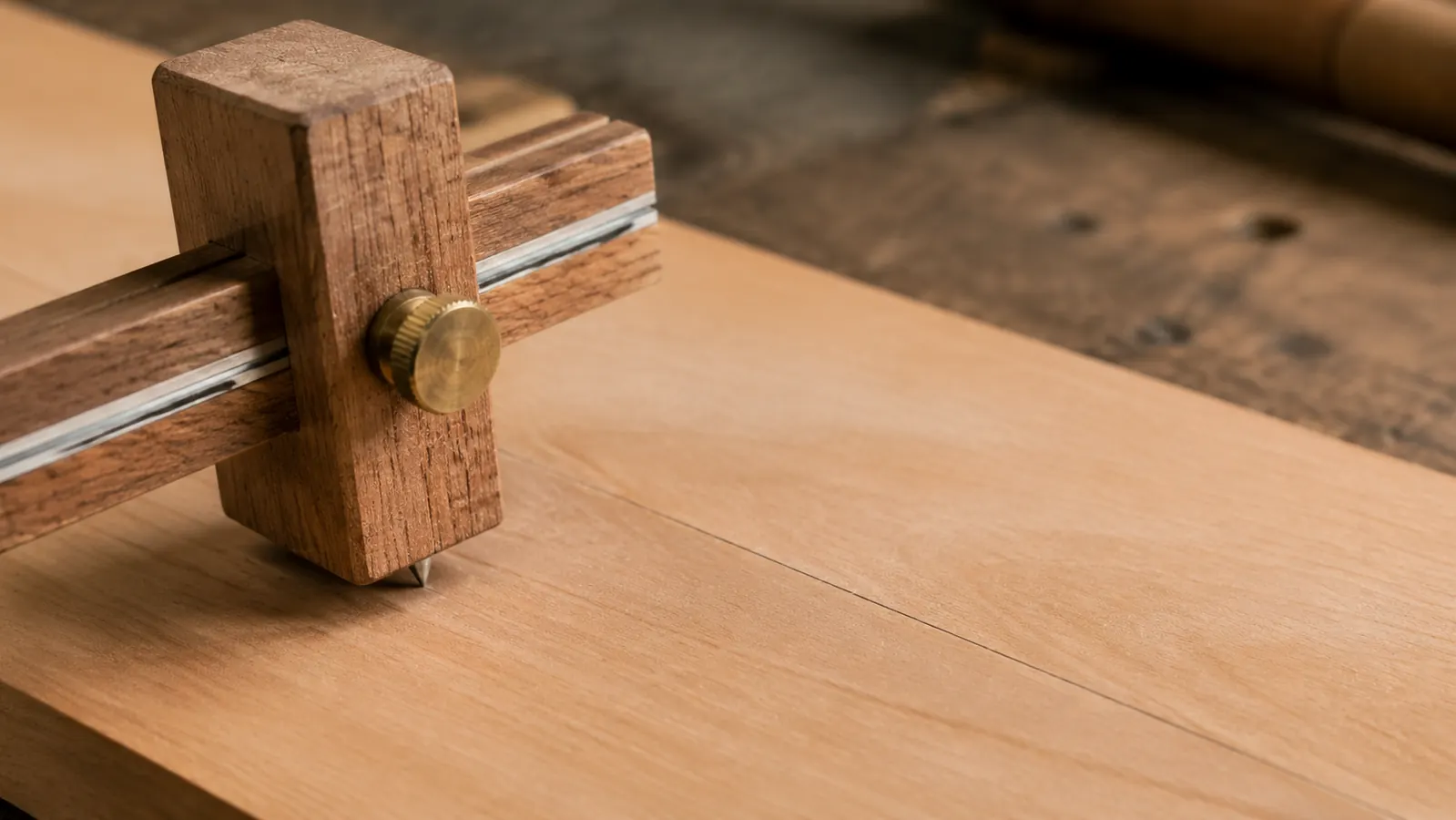
Setup took about fifteen minutes. The mobile base snapped together, the bag mounted without drama, and the 4-inch hose connected directly to my table saw's dust port. I pushed the collector into position, plugged it in, and started the saw. The difference was immediate and honestly a little embarrassing. I'd been tolerating what I'd been tolerating for no good reason.
The practical benefits went further than I expected. I'd been annoyed for years by a specific problem I couldn't fully name: my glue-ups had more squeeze-out contamination than they should. My reference surfaces, the ones I'd jointed and planed flat, would develop a thin dust film between the planer and the table saw, and that film would throw off my layout lines just enough to matter on tight joinery. I thought I was being careless. Turns out I was just working in a cloudy shop.
With the dust pulled away at the source, my reference faces stayed cleaner through the whole sequence of cuts. My marking gauge lines didn't disappear under powder between passes. My glue surfaces were actually clean when I brushed on the glue, instead of me wiping them down and wondering if I'd gotten everything. Small things, but they compound over a project.
The bag fills faster than you'd expect on heavy milling days, and the WEN isn't going to replace a two-stage cyclone if you're running a drum sander for hours at a stretch. I cover those limitations honestly in my full 18-month review. But for what most home woodworkers actually do on most weekends, it handles the load well. If you want to know how to connect it properly and sequence which tools to run through it, I put together a step-by-step setup guide that covers hose sizing, positioning, and which tools to prioritize first.
My dad worked in a basement shop for thirty years and developed a persistent cough he never connected to his woodworking. He figured it was just how it was. He's 74 now, and his lung function is noticeably compromised. I think about that sometimes when I'm in the garage. He didn't have the information. I do.
What I'd Tell You If We Were Sitting at My Kitchen Table
If you're where I was in February 2023, still sweeping and telling yourself you'll get to dust collection eventually, I'm not going to make you feel bad about it. I did it for twenty-five years. But I'd tell you the same thing I'd tell my younger self: the barrier is lower than you think, and the difference is larger than you expect.
You don't need a full ductwork system. You don't need a 3-horsepower cyclone. You need a collector that handles the work your shop actually does, positioned where your tools are, running while you run them. That's it. The WEN gave me that for under $130. Whether you go with the WEN or something else, just get something. Your lungs are not replaceable. Your shop can always be upgraded later. Start now.
The WEN is the easiest first step toward a cleaner, healthier shop.
It's been in my garage for over a year. The bag is easy to empty, the mobile base earns its keep every session, and I haven't sneezed my way through a rip cut since the week I set it up. Check current pricing before it moves.
Amazon Check Today's Price on Amazon →